Showing posts with label Bees. Show all posts

Monday, 4 October 2010

The Enemy

Honey Bee Diseases And Pests

Honey bee brood and adults are attacked by bacteria, viruses, protozoa's, fungi and exotic parasitic mites. Additionally, bee equipment is attacked by other insects. Disease and pest control requires constant vigilance by the beekeeper.

American Foulbrood - (AFB) is a bacterial disease of larvae and pupae. The bacteria form highly persistent spores that can be spread by adult bees and contaminated equipment. Infected larvae change color from a healthy pearly white to dark brown and die after they are capped. Cappings of dead brood sink inward and often are perforated. Check for AFB by thrusting a small stick or toothpick into the dead brood, mixing it then withdrawing the mass. Brood killed by AFB will be stringy and rope out about inch. Colonies with AFB must be burned by a state bee inspector. To prevent AFB, feed colonies the antibiotic TerramycinÆ according to label instructions in early spring and fall. Allow at least four weeks from the last TerramycinÆ treatment until the first nectar flow.

European Foulbrood - (EFB) is a bacterial disease of larvae. Unlike with AFB, larvae infected with EFB die before they are capped. Infected larvae are twisted in the bottoms of their cells, change to a creamy color and have a smooth "melted" appearance. Because EFB bacteria do not form persistent spores, this disease is not as dangerous as AFB. Colonies with EFB will sometimes recover on their own after a good nectar flow begins. To prevent EFB, treat colonies with TerramycinÆ as described above.

Chalkbrood - Is a fungal disease of larvae. Infected larvae turn a chalky white color, become hard then turn black. Chalkbrood is most frequent during damp conditions in early spring. Colonies usually recover on their own.

Nosema - Is a widespread protozoan disease of adult bees. In spring, infected colonies build up very slowly or not at all. Bees appear weak and may crawl around the front of the hive. Discourage nosema by selecting hive sites with good air flow. Damp, cold conditions seem to encourage this disease. Treat nosema by feeding the drug FumidilÆ B in sugar syrup in spring and fall. Do not feed the medication immediately before or during a nectar flow.

Wax Moths - Are a notorious pest of beekeeping equipment. Adult moths lay eggs near wax combs, then their larvae hatch and begin burrowing through the combs to eat debris in the cells. Moth larvae ruin combs and plaster them with webbing and feces. Honey bees are usually very good at protecting their colonies from moth larvae. If moth damage is found in a colony, there was some other problem (usually queen loss) that weakened the colony first. Moth damage is most common in stored supers of comb. Protect stored supers by stacking them no higher than five hive bodies. Tape shut all cracks, put paradichlorobenzene crystals at the top of the stack and cover the stack with a lid. Replenish the crystals as they evaporate.

Tracheal Mites - These microscopic mites enter the tracheae (breathing tubes) of young bees. Inside the tracheae, mites block air exchange and pierce the walls of the tubes to suck blood. Symptoms resemble those of nosema. Bees become weak, crawl at the hive entrance and sometimes uncouple their wings so that all four wings are visible. Colony death rates are highest during winter and early spring. If you suspect tracheal mites, see your county Extension agent for help in diagnosing the disease. Infested colonies are treated with MiticurÆ or special formulations of menthol.

Varroa Mites - These mites are about the size of a pin head and are copper in color. Female mites cling to adult bees and suck their blood. Females then enter a bee brood cell and produce several offspring which, in turn, suck the blood of the developing bee. Infested colonies almost always die within three to four years unless they are treated. Colonies are treated with ApistanÆ, a formulation of fluvalinate. Because tracheal mites and Varroa mites are newcomers to the United States, control technology is rapidly changing and has not been well worked out.

Where to get Bees?

The easiest, and sometimes the best, way to start keeping bees is to buy two established colonies from a reputable local beekeeper. Buying two colonies instead of one lets you interchange frames of brood and honey if one colony becomes weaker than the other and needs a boost. Buy bees in standard equipment only. Competent beekeepers usually have one or two hive bodies on the bottom board with shallower honey supers above. Question the seller if supers are arranged differently. The condition of the equipment may reflect the care the bees have received, so be suspicious of colonies in rotten, unpainted wood. Once the colony is opened, the bees should be calm and numerous enough that they fill most of the spaces between combs.

Be sure each super has at least nine frames of comb. Inspect combs in the deep supers for brood quality. Capped brood is tan - brown in color. A good queen will have at least five or six combs of brood, and she will lay eggs in a solid pattern so that there are few skipped cells. Look for symptoms of brood disease and wax moth larvae (see the section on "Honey Bee Diseases and Pests").

Bee hives are easiest to move during winter when they are lighter and populations are low. Moving hives is a two-man job. Close the hive entrance with a piece of folded window screen, seal other cracks with duct tape, fasten supers to each other and to the bottom board with hive staples then lift the hive into a truck bed or a trailer. Tie the hives down tightly. Remember to open hive entrances after the hives are relocated.

Why do Bees need flowers?

Why Do Bees Need Flowers?

Bees, like humans, require carbohydrates and protein to survive. They are able to get both from flowers, deriving carbohydrates from nectar and protein from pollen.

Why Bees Need Nectar?

Nectar is the base of all honey. Nectar is a sweet carbohydrate secreted from glands in different plants, mainly flowers. However, not all flowers can be used by honeybees. Deep blossoms may hold a lot of nectar but a bee's tongue is not long enough to reach the nectar within.

Why Bees Need Pollen?

Pollen is a protein that bees use to feed brood and create royal jelly for the queen. Bees collect pollen when their hairs rub against the anthers of flowers. Their front legs comb the pollen from their backs and deposit it on their back legs, where it is raked by hairs into a pollen sac and compressed.

Video- How to set up a Hive

A video off the internet of how to set up a hive. But where would you get the bees from is there a UK website? Who do you call? RESEARCH

Building a Bee hive

http://www.canadianhomeworkshop.com/multimedia/pdfs/Bee-Box.pdf
Image above explaining how to build a Bee Box

Help Bees

What do you need to keep Bees?

You plan carefully where each seed and plant will go. Then you water, weed and prune to make sure your garden thrives. But have you ever thought of attracting insects for the betterment of your flowers?

Bees are one of the most efficient pollinating insects around. Attracting them to your garden can help your flowers flourish and your plants prosper.
Having a place for them to breed, such as this bee-box project, is a great start. Another good idea is to use plants that will attract and promote pollination. Some plants that bees love are:

• dogwood
• black-eyed Susan
• sunflower
• hyssop
• wild geranium

Once you have a place for bees to breed and flowers they are attracted to, be sure to avoid presticides to keep your gardenÂ’s ecosystem healthy.

Types of common bees in uk

Different types of Bees in the UK.cuckoo bumblebees
rarer bumblebees

Sunday, 19 September 2010

To see the bee man - Horsforth

A few photographs I took when I went to meet the bee man at Horsforth.
£3.50 For some runny hunny
Car I saw on the way back looks like a Shane Meadows Location
Some random park in Horsforth
And again
One more
Some random flowers- had some time to kill.
Village clock
Cream & green building

Thursday, 16 September 2010

Mr Bee man Brian Latham Visit - Horsforth


Some Photographs from Wellington Place in Leeds where the bee keepers meet during the spring and summer seasons.


A new hive Brian put up on top of the buildings in the Headrow in Leeds. This will be part of a program by the BBC called Inside Out and will be broadcast around the second week in October.
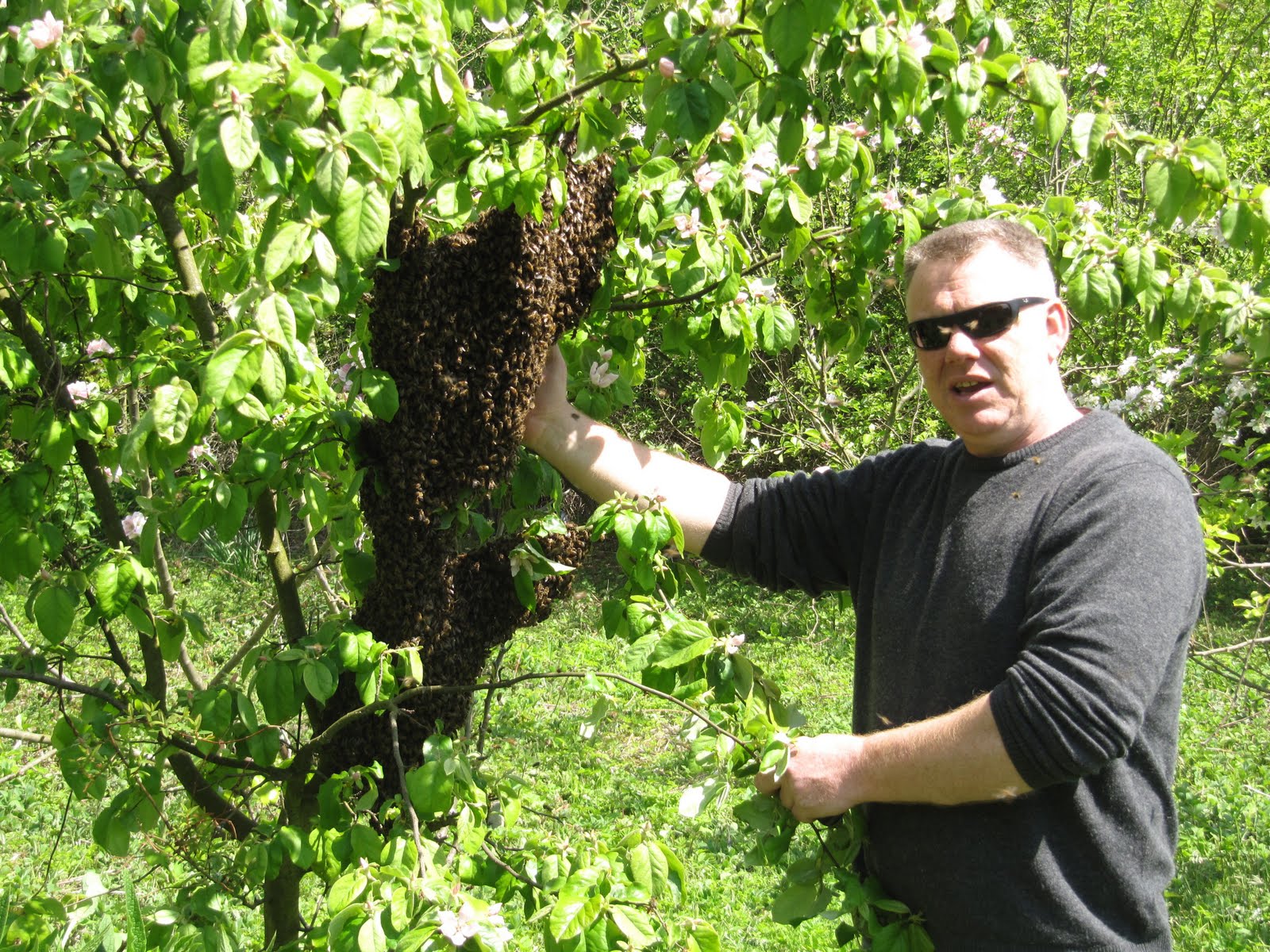
A swarm of bees that were asked to be collected in Leeds. The swarm has at least 30 thousand bees.


Photographs taken from the research lab at Leeds University. Experimenting with different liquid chemicals, I thought they looked pretty good as photographs.

After going to Leeds bee keepers and talking to Brian Latham I have now understood more about why people keep bees and more facts about the subject.

The UK government will spend £10million on research over the next five years for research and three of the research projects will be at Leeds University. Apparently this amount is a "drop in the water".


Wednesday, 15 September 2010

Screenshots of facts & Figures


http://news.bbc.co.uk/1/hi/8015136.stm

BBC NEWS

Loss of bees could be 'a blow to UK economy'

Eucera beeEucera is a type of solitary bee

If bees and other pollinators were to disappear completely, the cost to the UK economy could be up to £440m per year, scientists have warned.

This amounts to about 13% of the country's income from farming.

In a bid to save the declining insects, up to £10m has been invested in nine projects that will explore threats to pollinators.

The Insect Pollinators Initiative will look at different aspects of the insects' decline.

The initiative brings together specialists from a number of UK universities, as well as from the Food & Environment Research Agency and the Natural Environment Research Council's (Nerc) Centre for Ecology and Hydrology.

It is funded by several public and charity organisations, led by the Biotechnology and Biological Sciences Research Council (BBSRC).

Honeybees, hoverflies, wasps, bumblebees, moths and butterflies play a vital role in feeding people through the pollination of crops.


Speaking at a news briefing at the Science Media Centre, Professor Andrew Watkinson, director of the Living with Environmental Change programme, said that the new initiative "allowed us to bring in new skills in gene sequencing and epidemiological modelling with the expertise that already exists in the pollinator research community".

Some projects will look at factors affecting the health and survival of pollinators in general. Others will focus on specific species and diseases.

'Catastrophic' decline

Professor Watkinson said there was no single factor that could explain the pollinators' decline.

"There's a whole range of agriculture and land use, disease, environmental change [and] pesticides," he said.

"To tackle a complex problem like the decline of pollinating insects, where there are a number of potential causes, requires wide-ranging research."

For some species, such as bumblebees, the decline was "catastrophic", he added.

"It's really difficult to quantify [the extent of the decline of pollinators] and that's one of the problems we really need to address.

"What we need is some robust science and I think that this programme is going to provide it."

Another speaker, Claire Carvell from the Centre for Ecology and Hydrology, said that since the 1970s, there had been a 75% decline of butterfly species in the UK.

Also, out of 25 species of bumblebees, three had gone extinct, she added.

Bee Inspector at workInspectors are monitoring the health of honeybee colonies in England and Wales

These "extra special" bees with large hairy bodies are very effective at transferring pollen between flowers, she commented.

"They are also active at lower temperatures than other bees, so you'll see them out working earlier and later in the day.

"But bumblebees have declined worldwide, largely due to the loss of flowers and other habitats they need to survive in the countryside."

Dr Carvell said that her team will use a method of collecting DNA from live wild bumblebees to estimate how far queen bees fly to start new nests and how far workers fly to forage.

"These findings will allow us to manage landscapes in ways that are effective in conserving bumblebee populations," she concluded.

A brain disorder?

Neurobiologist Chris Connolly, of the University of Dundee, is leading research into the effect pesticides have on bees.


In particular, his team will assess any possible damage to the insects' abilities to gather food, navigate and even perform their special "waggle dance", which they use to let other bees know where nectar can be found.

He said that the pollinators' decline could be partially explained by a brain disorder - triggered by chemicals in pesticides.

"A single pesticide or miticide is not likely to be responsible… but a cocktail of different pesticides or miticides might [have a combined effect] to amplify the brain problem," explained Dr Connolly.

His study will concentrate on identifying these dangerous combinations in order to advise farmers about how to avoid them in the future.

It will include fitting tiny radio frequency ID tags to pollinators, which will act like "barcodes at the supermarket", recording when insects enter and leave the nest.


The vital thing, Professor Watkinson stated, was for the scientists to communicate the results of their studies to the people in the field - beekeepers and farmers.Other projects include investigating ecology and conservation of pollinators in cities, researching the impact of a mite named Varroa destructor, and looking into the effects of agriculture on bees.

"It is imperative that the science that's being done is fed through as quickly as possible to the conservationists and to the agricultural community, so that we can ensure food security and also the maintenance of our biodiversity," he said.

Monday, 13 September 2010

Plan Bee

Whilst looking at the ethics behind the Co-Operative I found out that they are starting a program about how to save the bee.
Screen shot of the Co-Operative Plan Bee campaign.

Advertisement for the same campaign to save the bee. This billboard uses 10,000 bees.


Part One - Plan Bee - The Co-Operative
Part Two - Plan Bee - The Co-Operative


Bee Facts - Plan Bee

bees - the facts

  1. Bees contribute £200m a year to the UK economy through pollination. Examples of foods pollinated by bees.
  2. Bee numbers in the UK have halved over the last 20 years. Last year alone a fifth of bee colonies did not survive the winter.
  3. No-one knows for certain what is causing bee losses. Explanations include: bad weather, pesticides, importing of non native bee species, viruses and a mite called Varroa.
  4. Neonicontinoids are a group of pesticides that have been linked to bee declines elsewhere in Europe. Sign our petition.

There are 44,000 beekeepers in the UK and over 95% are amateur. It’s easier to keep bees than you might think

Plan Bee activity in 2010

  1. The Co-operative will continue raise awareness about honeybees and their recent decline.

  2. A further £160,000 has been made available to support research into the demise of the honeybee. This is in addition to £150,000 committed to research in 2009.

  3. The Co-operative Food will continue with its temporary prohibition on the use of six of the neonicotinoid pesticides on own-brand fresh and frozen produce, which was introduced in 2009.[1]

  4. The Co-operative Farms is in the second year of a three year trial to develop a wildflower seed mix that will be planted alongside crops on our farms.

  5. The Co-operative will continue to support its members and customers to become bee-friendly gardeners, with advice and tips, through the Plan Bee campaign.

  6. In 2009, The Co-operative gave away over 300,000 packets of seeds to members and customers. More packets of wildflower seeds will be given away in 2010.

  7. The Co-operative will continue to make availablediscounted bee boxes which provide shelter for solitary bees.

  8. The Co-operative will continue to support its members to find out more about amateur beekeeping. In 2010, we will have urban beekeeper training projects in Manchester, London and Scotland.

  9. The Co-operative Farms is again inviting beekeepers to establish hives on its farms.

  10. The Co-operative will continue to promote the two documentaries we produced about ‘What’s happening to bees in the UK’ and ‘The Co-operative’s Plan Bee’. We'll also continue to support the film documentary ‘Vanishing of the Bees’, released in UK cinemas in 2009.

    [1] In April 2010, in light of evidence that two of the neonicotinoids, acetamiprid and thiacloprid, are lower risk to bees these have been moved from prohibited to monitored status in the pesticides policy.

Bees And Mankind


Quotes taken from book
Free J (1982) Bees and Mankind. London. Allen & Unwin

Page 11 - Evolution
"The honeybee colony is one of the most striking achievements of evolution, and its members exhibit the most complex behaviour known among invertebrates. The activities of the bees, including the way in which they defend their colonies and the division of labour among them, will be described"

Page 25 - Division of Labour
"There are two obvious advantages to this division of labour based on size. First, the smaller bees are undoubtedly able to move through the narrow complex passages in a bumblebee comb with greater ease than larger bees, and secondly, the larger bees, which spend more of their lives foraging, can collect larger nectar and pollen loads and suck up nectar more quickly than smaller bees."
Explaining how the jobs are decided and the organisation to work as a successful hive.

Page 55 - Collection of nectar and pollen
"The careful insect midst his works I view,
Now from the flowers exhaust the fragrant dew,
With golden treasures load his little thighs
And steer his distant journey through the skies."
Poem by John Gray "Rural Sports"
Maybe look at more poems, because after looking through three books their has been alot of poems I have came across, maybe it's to do with nature and outdoors that make it interesting to read about?
Close up photograph of bee hive

Note
Bees regurgitate the nectar and pollen in the hive and it is how the younger bees are feed.

Guide To Bees & honey


Quotes taken from book
Hooper T (2008) Guide To Bees & Honey. Hebden Bridge. Northern Bee Books

Page 21 - Honey Bee, Nervous System
"Insects have not only a brain in the head, but several small sub-brains or ganglia spread through the body"
Explaining the nervous system.

Page 17 - Alimentary System
"Food is broken down by the process of digestion and these products are then circulated by the blood and used to provide energy, body-building substances, and the requirements for carrying out the chemical processes of life"

Page 211 - Pests and Predators
"Swallows and martins will sometimes hawk over an apiary, taking quite a number of bees. Sparrows will on occasion make a dead set at one or two hives and feed their babies entirely on bees. Bluetits will take bees at the hive entrance in summer and try to get inside in colder weather."
So the main predators for the bees in England are birds.
Close up photograph of a hive
Busy beekeepers at work

Note
Bees release a chemical when under attack to let other bees aware, but bee keepers use steam because it makes the chemical smell turn neutral.

Friday, 10 September 2010

Plan Bee - Susan Brackney


Quotes taken from book
Brackney.S(2009)Plan Bee.London. Hay House

Page 6 - The Bee Family Tree
"Apoidea super-family, which is then sub-divided to include bumblebees, sting-less bees, and honeybees, among others.*"
*Sting-less bees live in tropical and subtropical areas including Africa, Australia, and South America, and although they may sound harmless, some types of sting-less bees can be surprisingly aggressive
Three main divisions to separate the Apoidea family. Bumblebees, sting-less, and honey bees.

Page 27 - They Are What They eat
"Wethers a hive's tiny bee babies are fated to be drones, workers, or even queens , nurse bees feed super-rich royal jelly to each of them at first. The viscous, milky stuff contains vitamin B, amino acids, sugars and trace of minerals, among other nutrients. As such, you'll find it in sundry health food supplements, over priced face creams, and even soaps, but I think royal jelly can do alot more for the bees than it could ever do for us. (I wonder, would people still snap up those royal jelly products if they knew the magic ingredient- in part the synthesis of digested pollen and bee saliva - had been secreted from glands inside the young worker bee's heads?)"
Explaining some of the products that Bees produce to feed younger bees which we buy for skin products, health food supplements and soaps.

Page 31 - Whos' in the hive?
"A honeybees life-span varies depending on the time of year. Bees raised to get through the winter can hang on for upto 140 days, but the life-span of a bee reared for summer work is just 4-6 weeks."
Sounds like a fine line from making it through the winter and not.
Worker, Queen and Drone bee
Shakespeare Poem about Bees

How Bees Mate


Notes
After a Drone - male bee mates with the queen bee in flight is dies after.
A queen bee usually mates with around twelve drones in her time.
"For a worker bee, going from an egg all the way to an adult takes about 21 days. At 24 days the drone (male) takes even longer. And for queens it's about 16 days in all"